
Are We Sleepwalking Into a Jobs Crisis? What Joe Hockey’s Warning Means for Your Career
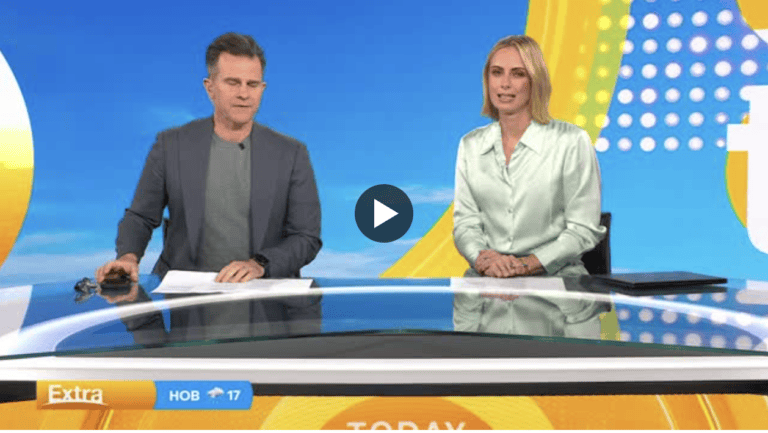
(Watch my Today Show segment in the clip above — then read on for the full conversation.)
The Today Show emailed me yesterday – could I come on this morning to make sense of a number that’s hard to ignore: 248,000 Australians made redundant in the last year.
And the timing couldn’t have been sharper. Last night, former Treasurer Joe Hockey had warned that Australia is “sleep-walking into the future” and could face 15% unemployment within five years.
It’s a confronting backdrop. So let me do what I do best: turn the fear into a plan. Here’s the conversation David, Sylvia and I had on air — and what it means for you.
1. Why is this happening?
For as long as organisations have faced uncertainty, their first instinct has been to cut costs — and the fastest line item to cut is people. What’s different now is that we’re living through multiple crises converging at once: cost-of-living pressure, economic headwinds, structural shifts in demand, and the arrival of AI.
So leaders reach for the same old playbook: make people redundant to save money. Sometimes AI genuinely is the driver. But more often, AI is the mask — a convenient story to dress up an old-fashioned cost-cutting exercise as “transformation.”
Here’s the shift that worries me most: redundancy used to be a last resort for businesses in trouble. Increasingly, it’s a pre-emptive move — companies cutting ahead of a problem they can see coming, to reassure boards and shareholders. That means it can land on high performers in healthy teams. Loyalty is no longer a shield.
2. So is anyone’s job actually safe?
Yes and no — and that nuance matters.
The World Economic Forum projects that nearly 40% of jobs will change significantly by 2030. But “change” is not “disappear.” While around 92 million roles may be displaced, roughly 170 million new ones are expected to be created. Most of those aren’t “tech” jobs — they’re the hybrid and adjacent roles that emerge whenever AI reshapes how work gets done.
Which brings me to the line I keep repeating, because it’s the whole game:
The risk isn’t that AI will replace you. It’s that someone who knows how to use AI will.
3. What can you do to keep yourself from being made redundant?
This is where you take back control. There are two things you need to do:
- Become as valuable to your employer as possible — and make sure everyone knows it. Yes, I know that goes against the Australian grain; we’re raised not to blow our own trumpet. But making your value visible isn’t bragging anymore. It’s a necessity.
- Use AI to keep yourself relevant for as long as possible. The people who thrive will be those who treat AI as an amplifier of their skills, not a threat to them.
I teach a simple 3-step framework for exactly how to do this — you can download the full white paper using the link below.
4. And if it’s already happened — how do you stay sane?
If you’ve been made redundant, first: this is a grief process, and you’re allowed to feel it. But the people who come through it best protect their wellbeing fiercely. My advice:
- Keep a routine. Structure is the antidote to spiralling. Get up, get dressed, have a plan for the day.
- Move your body and eat well. It can be tempting to hide away and lick your wounds. A little of that is fine — but get outside, move, and look after the basics. Your head clears when your body is looked after.
- Be kind to yourself. Your job was not your worth. You’re not behind; you’re between chapters.
- Make finding a job your job. Treat the search with the same discipline you’d give any role — set hours, targets and a system.
- Do some volunteer work. It keeps you busy, useful and connected, and it’s surprising how often it leads to the next opportunity.
5. How do you get back on your feet and land the next role?
Three things, and the order matters.
First, put AI to work for you. This is the part that still surprises people: the same technology disrupting the job market is now your most powerful job-hunting tool. You can use AI to run automated searches across job boards and the company websites you’re targeting, and to craft customised résumés and cover letters tailored to each role — in a fraction of the time it used to take. The tool that disrupted you can accelerate your comeback.
Second, stay human. Rebuild and nurture your network. Read from leaders you admire, share what you’re learning, and reinvest in your personal brand. The network you nurture during this period is often the very stepping stone to your next role.
Third, manage your expectations on timing. The more senior you are, the fewer roles there are — so give yourself up to six months and don’t read a slow start as failure.
What about Universal Basic Income?
David and Sylvia also asked me where I stand on UBI — and it’s a fair question when warnings like Hockey’s are in the air.
It wasn’t in the original brief – but they know me well enough after over 25 appearances that I’ll take anything they throw me.
I understand the appeal. If we genuinely face large-scale displacement, a financial floor under everyone sounds humane, and serious people across the political spectrum are debating it. But my position as a futurist is this: UBI treats the symptom, not the cause. Work gives us far more than income — it gives us purpose, identity, structure and connection. A cheque doesn’t replace any of that.
I’d rather we pour that same energy into reskilling at scale, into helping people own their careers, and into building organisations that redeploy talent instead of discarding it. A safety net may well be part of the answer. It should never be the whole answer — and it’s certainly no substitute for your own agency.
But yes, we should absolutely start talking about that as well as discussing some of the other big questions, like taxation. If we’re no longer taxing people’s wage, how does the government earn money? In a country with a great social safety net, this could turn into a real problem
The bottom line
Joe Hockey may be right that we’re sleepwalking. The cure isn’t panic — it’s waking up and taking deliberate action now, while you still have time to choose.
You cannot outsource your future. But you absolutely can own it.
What will you do in the next 90 days?
📥 Download the full white paper — FutureProof Your Career — here: for the complete 3-step framework and your 90-day action plan.
