
In one phone call this year, the Chief People Officer of a global engineering firm described two things happening inside her organization that looked like complete opposites.
Some of her people were racing ahead with AI, out of sight. She had already told her executive committee, “They’re already adapting, changing the way they work, solving it without your permission whilst we figure out who’s in charge.”
At the same time, when the firm rolled out Copilot Chat training, one of its trade unions objected that it hadn’t been consulted about a change to its members’ work.
Is some version of that happening in your organization? Do you have people quietly using ChatGPT on real work while the tool you paid for sits unopened? Have you heard “nobody asked us” in a room you thought was on board?
The research says you almost certainly do. The University of Melbourne and KPMG found 60% of Australian employees say they have hidden their use of AI at work, and 48% of those who use it have done so in ways that break company policy. Gallup asked US workers who have AI available but don’t use it why not. 46% said they would rather keep working the way they do now, 43% said they were ethically opposed, and only 10% said they were worried about their role being replaced.
In my work with leadership teams, the hiding and the pushing back grow from the same root. The person using AI quietly is afraid of looking lazy or less competent. The person resisting is afraid of losing the work that defines them. Both are threats to identity and standing, and vague language makes both worse, because when leaders leave a gap, people fill it with their own story, and that story is rarely generous.
In October I wrote that for the people who will never read the board pack, the words in the announcement are the strategy. I’ve spent the weeks since turning that into something leaders can actually use.
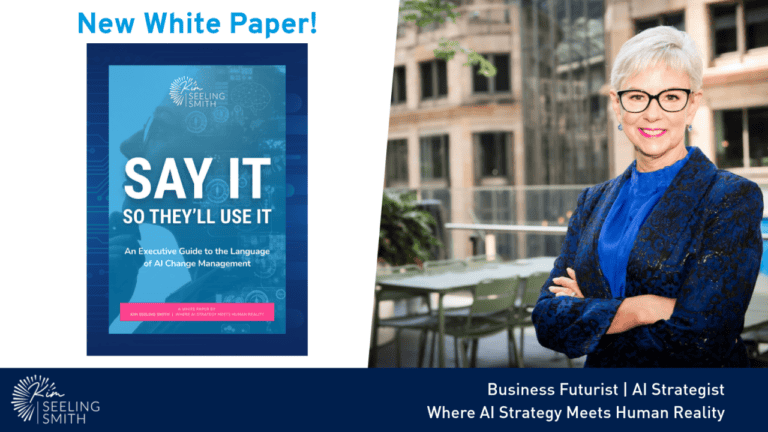
Say It So They’ll Use It: An Executive Guide to the Language of AI Change Management is now available. Inside you’ll find the CANDID Rules™, six rules for the language of AI adoption, each with a “say it like this” line; the Room Test, five questions to run your next AI announcement through before it goes out; a glossary of what people often hear when you say “efficiency” or “upskilling”; and case studies from Worley, Commonwealth Bank and Klarna.
Which are you seeing more of right now, people hiding it or people pushing back?
Link to download the white paper
If you’re building a 2027 conference program for leaders, this is the thinking at the heart of my keynotes on the human side of AI adoption, delivered with a live AI demonstration built for your audience. Send me a message and let’s talk about your event.
#AIAdoption #ChangeManagement #ShadowAI #Leadership